
Royal River Dam Removal
Why Dam Removal Matters
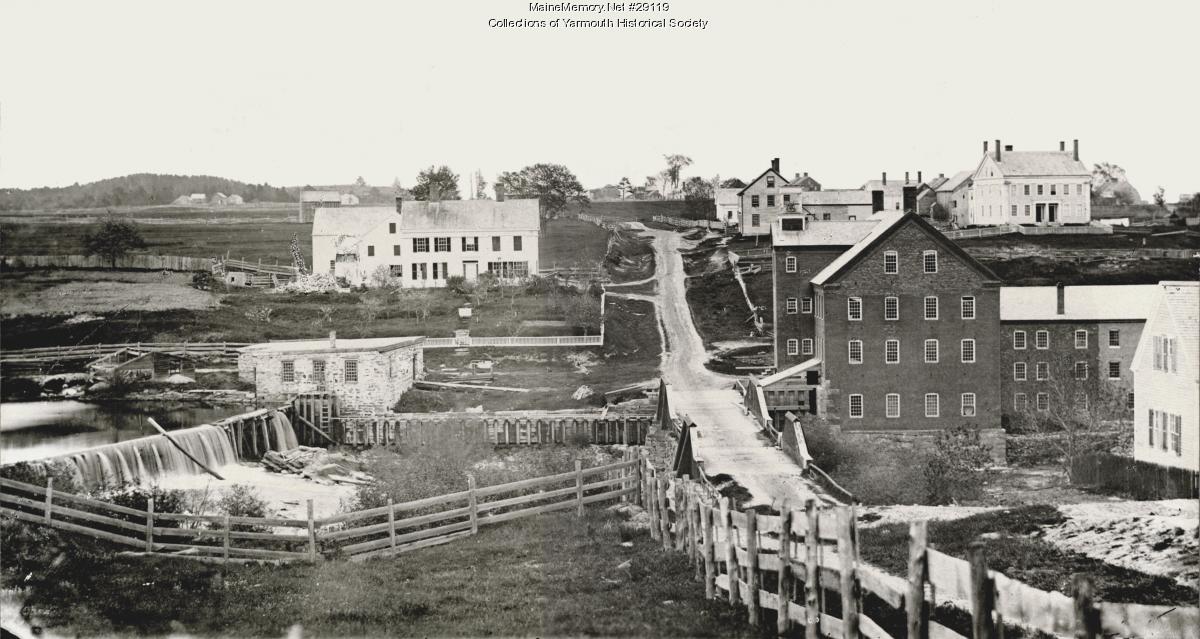
Since the mid 1600’s the Royal River has been harnessed, diverted, dammed, and in countless ways utilized as an asset for the benefit of surrounding communities. For at least the past 250 years it has been completely dammed. The Royal River once powered and cooled great mills and enabled great industry by providing a ‘free’ source of energy in an era when there were few other sources available. The effect of these activities on the river itself perennially concerned area residents who argued for proper fish passage so as not to lose access to the migratory fish that had historically utilized the river. Even this argument —for a time— viewed the river as a giver, and not as we know now as an interdependent living ecosystem.
Throughout the arc of our nation our relationship with nature has continually evolved, but has predominantly been one of taking, and using. The clearcutting of forests, the decimation of our fisheries, the continual waste poured onto and into the land and rivers—most often intentionally — is well documented, and for a time even celebrated. Only in the past fifty years have we begun a meaningful turn toward a fuller understanding of the costs of this past world view. At long last we have learned to not only recognize, but to value the practice of sustainable forestry and its benefits to clean water and healthy rivers. So too have we learned the enormous value of wetlands that naturally buffer against flooding and provide (for free) cleaner water, we have learned the importance of soil health, air quality and so much more.
As recently as the 1970’s and 80’s many Maine waterways were not only undrinkable, but they were also unusable waste streams. From this tipping point we have begun to reassess our relationship to the natural world through the recognition that intact natural systems provide effective, sustainable services that we would otherwise need to pay for. We have learned that species diversity is essential to a healthy planet. This view of the natural world is a returning—of sorts—to a more balanced relationship with the natural world.
From this perspective dam removal is so much more than opening the gates for a free-flowing river it is a declaration that the river is more valuable as a natural system for the services and benefits that accrue as we live alongside its banks.
The investment needed to undertake this historic project is not insignificant. Fortunately, there are numerous individuals, private foundations and government programs that recognize this project as an investment in the future health of the watershed and by extension an investment in our communities. By the same turn the cost of keeping the dams—both monetary and environmentally —simply do not justify the continued outlay of tax dollars to preserve the two dams that so clearly compromise the health of the river. During the first Earth Day celebrations in 1970 the organization Friends of the Earth coined the term Think Globally, Act Locally. Despite the many global environmental challenges we currently face, we also have the opportunity, right here and right now, to support conservation that strives to leave the natural world in better condition than we inherited it. It is time to FREE THE ROYAL -- Once and For All.
Frequently Asked Questions about the Royal River Restoration Initiative
Is this project just about dam removal? What other changes are expected?
While the removal of the two dams (Bridge Street and East Elm Street) comprises the majority of the work the overall restoration vision for the watershed is much larger. As it relates to the two dams the plan is complete removal of the structures and related components. Additionally we are expecting that the “middle falls” section of the river (within Royal River Park between the two dams) to potentially need modification as this area was heavily modified for the construction of the once great Forest Paper Company.
The project also entails recreational access improvements on the river including updating two boat launches and establishing a dry hydrant for public safety uses.
Who is coordinating the Dam Removal?
The Town of Yarmouth—owner of both dams—is supported by the Free the Royal Coalition. This coalition is comprised of members representing American Rivers, Maine Rivers, Royal River Alliance, the Town of Yarmouth, the Casco Bay Estuary Partnership, and the Royal River Conservation Trust. Members of the coalition have helped to submit numerous grant proposals, permits and applications necessary to move this ambitious plan forward. Further support from the US Fish and Wildlife Service Gulf of Maine program, Maine Inland Fisheries and Wildlife are among some of the many agencies and organizations assisting the efforts of this coalition.
Who is paying for Dam Removal? What will it cost?
All costs for dam removal and related projects will be funded by a combination of State, Federal and private foundation grants. Additionally, the Free the Royal Coalition will be coordinating opportunities for individual donations to support this initiative. The Town of Yarmouth was authorized by the Town Select Board to do this project with the stipulation that Town residents would not be responsible to pay for dam removal costs.
The current plans to remove the two dams, modifications at middle falls, recreational and safety improvements total $3.8 million.
Are Yarmouth taxpayers going to be expected to pay for removal?
NO, the Town of Yarmouth is obligated to finding alternative sources of funding so the cost will not be borne by local taxpayers.
What about the sediment? Is it going to impact the harbor? Is it dangerous?
Over the past 20 years multiple studies into the quantity and composition of the sediment impounded behind the two dams indicate that there is minimal hold over sediment accumulating behind either dam. The studies suggest that the majority of the sediment is carried through, or over the dams and into the harbor. In the instance that excessive sediment is discharged, the town has committed to support the harbor businesses' efforts to obtain and finance risk mitigation insurance from any detrimental effects related to dam removal. As the studies indicate that there are not large ‘stores’ of sediment in the river basin the findings suggest that the risk of contaminants being released once the dams are removed is similarly unexpected.
How will all of this impact water levels?
The most dramatic changes in water levels will be the areas behind and between the two dams. Currently through much of this middle stretch the river looks more like a pond in places. Upstream of the East Elm Street dam water levels are expected to drop significantly immediately adjacent to the current dam (5-6 feet) and by lesser amounts as the river moves upstream. The extent of any lowering of the river levels is not expected to extend beyond the Route 9 bridge in North Yarmouth near its intersection with North Road.
What is the process to remove the dams, and can I watch?
Typically, engineers create a diversion channel for the river to flow though to enable secure access to removal of the dam structure. In the case of Bridge Street it may be possible to utilize the former ‘penstock’ tunnel for this purpose. Removal of the Bridge Street dam may be viewed from the Bridge at Sparhawk Mill but will be dependent upon the placement of construction equipment.
Will salmon return to the Royal River? What about other fish?
Never say never! While historically it is believed that Atlantic salmon entered the Royal River it is unlikely that a self-sustaining population will return anytime soon. That said it is widely expected that blue-backed herring, alewives, sea-run trout, American eel and American Shad may quickly re-establish use of the river. While much of the main stem of the Royal is muddied by underlying clays most of the river tributaries and adjoining ponds (and upper reaches of the river) remain cold and clear throughout most seasons and are capable of providing habitat for many of these species.
How will the health of the river improve?
The most immediate and significant impact on the river will be the uninterrupted flow from the river to the ocean. As the water levels drop in certain areas the river will become more ‘streamlined’ carving a narrower, and by extension quicker flow in some areas. These same quicker flows will help to naturally oxygenate the water making it a more productive environment for aquatic insects which in tern will benefit the fish, birds and other species. All of this new biomass within the river and throughout the watershed will allow for a more dynamic natural riverine system whereby nutrients from the ocean will be transported and deposited throughout the watershed. As one author once noted: “The ocean will feed the forest.”
I want to support this effort, how can I help?
That’s great! Individual donations to support the Restoration of the Royal River are always welcome. To make a donation specifically for Dam Removal contact Chris Franklin at the RRCT office. In addition to financial support we will also keep you appraised of our ongoing efforts to participate in any workdays related to this project and to connect you to some of the citizen science projects underway.
MORE RESOURCES:
Town of Yarmouth Website: The official source of project proposals and studies.
Royal River Alliance: Another great source of information (and inspiration!)
Maine Rivers: Dam Removal Stories and resources.
American Rivers: National organization working for river conservation, preservation and restoration.
